

Elevate Your Evening: Experience the Magic of Mr. Stork
January 2, 2026Tren Slot Gacor 2026: Dari Mitos hingga Fakta
January 6, 2026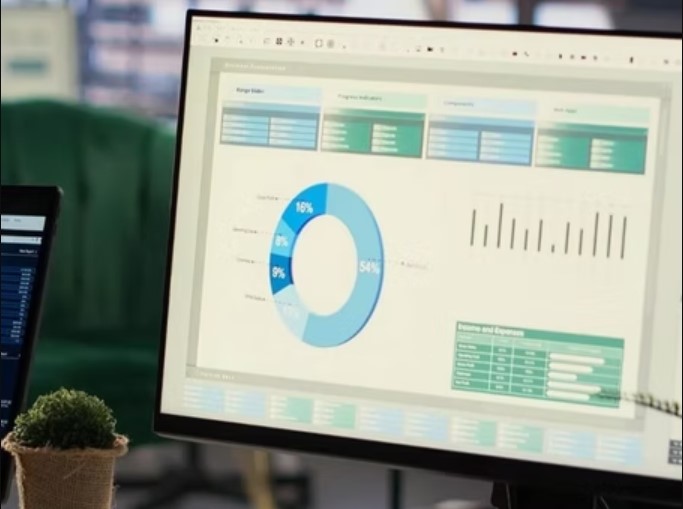
In today’s data-saturated business environment, information is not the differentiator—clarity is. Companies are awash in metrics from CRM, ERP, financial systems, and operational tools, yet many struggle to translate this raw data into actionable insight. This is where the art and science of dashboard design becomes critical. A well-architected Power BI dashboard does more than display numbers; it tells a story, highlights anomalies, and guides strategic decision-making with precision. Actomate, a specialist in data solutions, has refined a methodology for Power BI dashboard design. It’s called Actomate’s solution to Power BI dashboard design and moves beyond simple visualization to create intuitive, driver-centric command centers for businesses.
The Challenge of Modern Data Consumption
The common failing of many business intelligence initiatives is the “data dump” approach: aggregating every possible metric into a single, complex report. This leads to dashboard fatigue, where users are presented with overwhelming visuals but lack a clear path to action. The consequences are tangible: missed opportunities, delayed responses to market shifts, and decision-makers reverting to “gut feeling” because the data is inaccessible.
Actomate’s Solution: A Three-Pillar Philosophy
Actomate’s approach to Power BI dashboard design is built on a foundational belief that technology must serve human judgment, not replace it. Their solution rests on three core pillars:
1. The Hierarchy of Insight: Strategic, Operational, and Granular
Actomate designs dashboards in interconnected layers, recognizing that different users need different lenses on the data.
- The C-Suite Strategic View (The “Why”): For executives, Actomate creates high-level dashboards focused on Key Performance Indicators (KPIs) that align directly with strategic goals—profit margin trends, customer lifetime value, market share movement, and overall operational health. The visuals are clean, using gauges, trend lines, and high-impact summary cards to answer the fundamental question, “Are we on track?”
- The Managerial Operational View (The “What”): For department heads, dashboards drill into the drivers of those strategic KPIs. A sales manager sees pipeline velocity, conversion rates by team, and regional performance. An operations manager monitors production efficiency, inventory turnover, and logistics costs. This layer identifies what is working and what is not.
- The Analytical Granular View (The “How”): For analysts and specialists, Actomate ensures the data model supports deep, ad-hoc exploration. Through intuitive drill-throughs and detailed tabular reports, users can investigate the root cause of a trend, answering the question of how to replicate success or address a failure.
2. Narrative-Driven Design and Contextual Intelligence
Actomate treats each dashboard as a guided narrative. Instead of a random assortment of charts, the layout follows a logical flow: from overarching outcome, to primary drivers, to supporting detail. They employ principles of data visualization best practices—using the right chart for the right data, maintaining a coherent color scheme, and eliminating “chart junk.” Crucially, they embed contextual intelligence. Metrics are never shown in isolation; they are accompanied by benchmarks (targets, past performance, industry averages) and calculated metrics like Month-over-Month growth or variance to forecast. This turns a number into a meaningful signal.
3. The Engine Room: A Robust and Agile Data Architecture
The most beautiful dashboard is useless if it’s built on shaky data. Actomate’s process begins long before the first visual is drawn, with a focus on sustainable data engineering.
- Unified Data Modeling: They integrate disparate data sources (SQL databases, cloud APIs, Excel files) into a cohesive, clean data model within Power BI. This single source of truth is the foundation for all dashboards.
- Focus on Performance: Dashboards are optimized for speed, even with large datasets, using techniques like data aggregation, efficient DAX measures, and DirectQuery or Import mode optimization to ensure user interaction remains seamless.
- Governance and Scalability: The solution is built with growth in mind. Actomate establishes clear data governance protocols and a scalable architecture, making it easy to add new data sources or report pages as business needs evolve.
The Actomate Advantage: Partnership and Process
What truly distinguishes Actomate is their collaborative, phased implementation process:
- Discovery & Empathy: They begin by interviewing stakeholders to understand key business questions, pain points, and decision rhythms.
- Blueprint & Data Foundation: A design blueprint and a technical specification for the data architecture are created and validated.
- Iterative Development: Dashboards are built in agile sprints, with frequent user feedback loops to ensure the output aligns perfectly with need.
- Enablement & Evolution: Actomate trains users, documents the solution, and establishes a framework for ongoing iteration, ensuring the dashboards remain relevant.
Conclusion: The Dashboard as a Strategic Asset
Actomate’s solution to Power BI dashboard design transforms business intelligence from a static reporting tool into a dynamic system for performance management. By layering insights, crafting a clear data narrative, and engineering a reliable backend, they empower organizations to move from passive data observation to proactive, data-informed leadership. In doing so, they turn Power BI from a software expense into a strategic asset that drives efficiency, identifies opportunity, and provides a decisive competitive edge.
FAQs on Actomate’s Power BI Dashboard Design Solution
1. How is Actomate’s approach different from just hiring a freelancer to build a few Power BI reports?
A freelancer often delivers a product—a set of reports based on an initial request. Actomate delivers a process and a partnership. Their discovery phase uncovers underlying business questions you may not have articulated. They build a scalable data model first, which is the reusable engine for all future reports, not just a one-off dashboard. They also focus on adoption, ensuring the solution is usable and valuable for all stakeholder levels, from analyst to executive.
2. We have data in many different systems (Salesforce, QuickBooks, custom databases). Can Actomate handle this complexity?
Yes, this is a core specialty. Actomate’s initial phase involves data architecture design, where they map out all source systems and define the optimal method (APIs, connectors, ETL processes) to bring this data into a single, coherent Power BI data model. They clean, transform, and relate the data so that, for example, your financial results can be seamlessly analyzed alongside your sales pipeline data, providing a unified view of the business.
3. How long does a typical dashboard design project take, and what is our involvement?
Timeline depends on scope (number of data sources, dashboard complexity, users), but a foundational project for a key business unit typically ranges from 6 to 10 weeks. Your involvement is crucial, especially in the initial discovery and weekly review sessions during the iterative build phase. Actomate’s agile methodology ensures you see progress early and can provide continuous feedback, guaranteeing the final product meets your exact needs.
4. Can we customize and edit the dashboards ourselves after they are built?
Absolutely. A key goal of Actomate’s enablement phase is to transfer knowledge and capability to your team. They build dashboards using standardized, maintainable practices and provide documentation and training. For ongoing changes, they can establish a support model—your team can handle minor edits, while Actomate can be engaged for major enhancements or new data source integrations. Their robust underlying data model makes self-service modification much simpler.
5. What kind of tangible business outcomes have clients seen from your dashboard designs?
Client outcomes typically fall into three categories:
- Efficiency: Reducing time spent on manual data gathering and report compilation by 60-80%, freeing staff for analysis.
- Revenue & Margin Growth: Identifying underperforming products or customer segments, optimizing pricing, and improving sales funnel conversion rates through clearer visibility.
- Risk Mitigation: Enabling real-time monitoring of operational KPIs (like inventory stock-outs or project budget burn) allows for proactive intervention weeks earlier than before.
The fundamental outcome is a shift to a culture where meetings and decisions start with a shared, trusted data foundation.
